Showing posts with label equivalence. Show all posts

Wednesday, 28 September 2016

Group selection vs kin selection: evidence from examples

Modern versions of kin selection and group selection have turned out to be essentially equivalent. However, historical examples of his selection and group selection have covered some rather different territory. Group selection enthusiasts have chosen phenomena such as senescence and warning signals. From the perspective of kin selection, some of the most obvious examples include breast feeding, parental care and nepotism. The kin selection examples are good, but the group selection ones are more dubious. I've previously argued that the reason group selection was associated with dodgy examples is because advocates sought to distinguish their theory from kin selection - and so avoided examples where it was obvious that kin selection was responsible. The details are in my 2104 article "How kin selection pushed group selection into the scientific fringes".

I think we are seeing a similar phenomenon with cultural group selection and cultural kin selection. My articles on cultural kin selection are illustrated with examples of where kin selection works on shared memes, rather than shared genes. These examples include uniforms, money and religious brotherhoods and sisterhoods. I think these are real examples of cases where Hamilton's rule applies to memes. However, the cultural group selection examples look rather different. One example often given involves Dinka and Nuer populations in the Sudan. Another example involves monogamous marriage customs. In these cases, a simple explanation is that some memes involved are fitter than other ones. Evidence that the memes involved are deleterious to individuals yet spread through group level reproduction or extinction seems to be completely missing. Maybe these are just bad memes. Cultural group selection seems largely unnecessary.

The tendency of group selection enthusiasts to pick bad examples seems common to both the organic realm and the cultural realm. However the explanation I have previously given for the bad examples in the organic realm does not seem to be applicable to the cultural realm. In the case of cultural evolution, cultural group selection seems to be much better known than cultural kin selection is. So, the idea that cultural group selection was bent out of shape to avoid cultural kin selection does not seem very plausible. Another explanation would seem to be required.

My perception is that the cultural group selection enthusiasts are choosing examples of cases where one group does better than another one for cultural reasons. However, that's not a particularly good way of finding examples of where Hamilton's rule applies. The native Americans did badly as a group recently - but that wasn't really due to kin selection or group selection. Their environment changed rapidly and they failed to adapt quickly. Hamilton's rule isn't terribly relevant in cases like these - even though one group is exterminating another one. This is part of the historical problem with group selection. People see groups apparently exterminating each other and then leap to group selectionist explanations without bothering to properly test them to see if they are plausible.

One possible reply by group selection advocates is that kin selection and group selection don't cover the same ground after all. However, lots of people have held that position over the years, but the evidence for it doesn't seem to be there. If you accept equivalence, I think is is hard to deny the prevalence of bad quality examples of group selection. When was the last time you heard breastfeeding or parental care given as an example of group selection? Never, right? Group selection advocates are not thinking about mother-offspring pairs as "groups" - even though that's where the maths says the effect is strongest. Inferior examples associated with group selection arise in both the cultural and organic realms. My previous argument about how kin selection pushed group selection into the scientific fringes doesn't look as though it is the whole explanation. Maybe group selection is just misleading or confusing.

Friday, 3 October 2014

Confusion about the topic in the popular press

The popular presentation of the kin selection vs group selection affair still seems to be very confused. For example, consider the coverage of a recent study by some group selection advocates: "Elusive Form of Evolution Seen in Spiders". The article says:
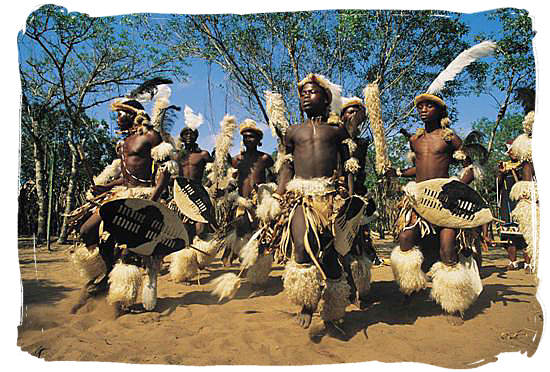
According to one model, known as kin selection, highly related organisms such as bees and ants can develop altruistic behavior — for example, many females forgo reproduction in order to raise the queen’s brood — because they will still pass down their genes indirectly, through the queen. But despite its altruistic appearance, kin selection is selfish — it helps an individual’s genes to survive. Can natural selection promote truly unselfish traits, behaviors that are good for the group, but not necessarily to the benefit of individuals (or their immediate kin)? Some evolutionary models predict that it can [...]

The rest of the article is all about group selection. Can kin selection be selfish while group selection is altruistic? Not according to the modern scientific consensus on the topic - that has kin selection and group selection being different accounting methods that attempt to account for the way in which genes propagate in viscous populations. Modern versions of these theories make the same predictions.

Originally, group selection was widely imagined as taking place between demes. However Williams, Maynard Smith, Dawkins and many others pointed out that this sort of "group selection" didn't work very well - individual-level adaptations swamped the group-level ones. Much later, the "groups" of group selection were re-imagined as involving any kind of social cohesion, including - critically - family groups consisting of mothers and their offspring - or groups of siblings. Individuals are then modeled as being part of an enormous number of partly-overlapping groups - including, critically, close family groups. With this radical readjustment, this new form of group selection - if properly applied - reproduces the predictions of kin selection exactly.

Most group selection advocates have now (finally) come on board with the scientific consensus on kin selection that was established in the 1970s. They recognize they these two theories - if properly applied - produce the same predictions and results. However, you wouldn't guess at this from this popular article. It's promoting the idea of group selection as a novel, revolutionary theory. This conception of group selection is not scientifically accurate.

Another article promoting the study has a different take on it: group selection vs gene selection. Their champions of "gene selection" are Pinker and Dawkins. It should really be group selection vs kin selection. Genes (in the broad sense of heritable information) underlie both.

More coverage:


Update 2014-10-29: Goodnight has weighed in on his spider study on his blog. Kin selection and equivalence are apparently unmentionable topics. To me this seems like a parallel universe.

Wednesday, 9 April 2014

Why the kin vs group selection arguments persist

There have been a few attempts to explain the persistence of the clash between kin selection and group selection enthusiasts, beyond the recognition of the broad equivalence of the approaches.

D. S. Wilson wrote Clash of Paradigms: Why Proponents of Multilevel Selection Theory and Inclusive Fitness Theory Sometimes (But Not Always) Misunderstand Each Other.

Recently Herbert Gintis has offered his perspective in a review of the book Evolutionary Restraints: The Contentious History of Group Selection.

It seems to me that much of the apparent disagreement comes from those on the outskirts of the debate, who don't properly understand it. The last couple of years has seen a number of confused articles - from Steven Pinker, Edward Wilson, Martin Nowak and others - who just don't know what they are talking about.

Part of the disagreement comes from inertia. People get taught one technique and then get attached to it - and are reluctant to use the other 'unnecessary' approach.

I also think this is partly a conservative vs revolutionary issue. Kin selection is the establishment, group selection is the rebel. Kin selection is tried and trusted, group selection is new and disruptive. Theories with these traits appear to different personality types.

There's also the issue of 'selfishness'. Group selection pictures groups that nurture cooperation flourishing at the expense of groups of selfish individuals. Kin selection seems to be promoting a picture of gene level selfishness. This picture is factually false (the reality doesn't change depending on how you look at it) but the connotations are there. Some like to publicly signal their unselfishness via their beliefs. To others, such cheap signalling seems more like tasteless self-promotion.

Lastly there's confusion over cultural evolution. Most of the group selection enthusiasts come from the social sciences. I've repeatedly heard them argue that kin selection only applies to genetic relatives, and that human cooperation extends beyond blood kin - so there must be something else going on. This argument ignores the important topic of cultural kin selection. The "something else" that is going on turns out to be kin selection after all.

Since kin vs group selection seems closely tied to political and moral issues, perhaps we won't see much more agreement on the topic anytime soon.

Saturday, 28 December 2013

Why can't we all just get along?

After the 2010 Nowak, Tarnita, & Wilson affair, Samir Okasha weighed in with a comment in Nature, effectively asking: why can't we all just get along?
The paper was titled: Altruism researchers must cooperate. It is indeed ironic that the science of cooperation has led to so much scientific acrimony.

In the paper, Samir embraces equivalence, writing:

kin and multi-level selection are not alternative theories; they simply offer different takes on the question of how social behaviour evolved. Proponents of kin selection, for example, explain sterile workers in insect colonies by saying that the workers are helping the queen to reproduce, and thus boosting their own inclusive fitness. Proponents of multi-level selection argue that the workers are providing a benefit to the colony as a whole, thus making the colony fitter than other colonies. These explanations may seem different, but mathematical models show that they are in fact equivalent
He says the persistent rival camps are a puzzle since:

The existence of equivalent formulations of a theory, or of alternative modelling approaches, does not usually lead to rival camps in science. The Lagrangian and Hamiltonian formulations of classical mechanics, for example, or the wave and matrix formulations of quantum mechanics, tend to be useful for tackling different problems, and physicists switch freely between them.
His explanation:

History shows that, despite its enormous empirical success, evolutionary biology is peculiarly susceptible to controversy and infighting. This is particularly true of social evolution theory, in part because of its potential applications to human behaviour.

I think this is essentially correct. People fight over application of evolutionary theory to humans for many reasons, but among them are: "it's complicated", and "it's important to get it right".

Group selection doesn't score well in the latter category. It isn't so much that it is wrong, it's more that it has led to decades of muddle, confusion and poor-quality science. If kin selection and group selection are feeling different parts of the same elephant, kin selection has hold of the trunk, while group selection is groping the left thigh.

It is certainly frustrating to have all the biology papers using kin selection, while all the humanities papers seem to use group selection.

A big part of the problem is misunderstandings surrounding cultural evolution. Cultural evolution has historically lagged by decades behind conventional evolutionary theory. There was a revolution in the 1970s in which group selection fell out of fashion, and kin selection became much more popular. A parsimonious explanation of the penchant for group selection in the social sciences is that the field of cultural evolution has yet to go through this transition. The significance of relatedness between memes and memeplexes has yet to be fully appreciated.

Tuesday, 18 September 2012

Group selection and kin selection: formally equivalent

These days, there's a scientific consensus about group selection and kin selection.

As Marek Kohn said in 2008:

There is widespread agreement that group selection and kin selection — the post-1960s orthodoxy that identifies shared interests with shared genes — are formally equivalent.

As Michael Wade, 2009 put it:

It is remarkable that kin selection has been widely accepted and group selection widely disparaged when, for simple genetic models, they are actually equivalent mathematically.

As Peter Richerson, 2012 put it:

I think most evolutionists now agree that kin and group selection are the same thing.

Such observations date back to Hamilton (1975). Queller (1992) is another important paper on the topic.

Modern paper titles in the area include: "Group selection and kin selection: two concepts but one process" and "Group selection and kin selection: formally equivalent approaches".

In "Social semantics: how useful has group selection been?", West, Griffin and Gardner (2009) state:

There is no theoretical or empirical example of group selection that cannot be explained with kin selection.

The theoretical equivalence of kin selection models with those of the new group selection seems to be fairly widely recognized. Wilson and Wilson (2007) seem to agree, saying:

The theories that were originally regarded as alternatives, such that one might be right and another wrong, are now seen as equivalent in the sense that they all correctly predict what evolves in the total population. They differ, however, in how they partition selection into component vectors along the way. The frameworks are largely intertranslatable and broadly overlap in the kinds of traits and population structures that they consider.

Formal models of "group selection" and "kin selection" are now widely regarded as producing the same results. Gardner and Grafen (2008) say:

group selection has already been incorporated into social evolution theory, and is found to be exactly equivalent to kin selection: the two approaches are simply different ways of describing the same evolutionary process and both lead to the prediction that individuals should maximize their inclusive fitness

Here's Gardner, West and Wild (2011):

it has long been understood that the kin selection and multilevel (group) selection approaches to social evolution are mathematically equivalent, and merely represent different partitions of the same evolutionary process (i.e. natural selection; Hamilton, 1975; Grafen, 1984, 2006a; Wade, 1985; Frank, 1986, 1995; Queller, 1992b; Rousset, 2004; Gardner et al. , 2007; Lehmann et al., 2007b; Gardner & Grafen, 2009). No model of multilevel selection has ever delivered a (correct) prediction that could not be reformulated in terms of kin selection – despite repeated claims to the contrary.

Kerr and Godfrey-Smith (2002) recommend switching between the two perspectives - saying:

we also argue that each type of model can have heuristic advantages over the other. Indeed, it can be positively useful to engage in a kind of back-and-forth switching between two different perspectives on the evolutionary role of groups. So the position we defend is a “gestalt-switching pluralism.”

Group selection enthusiast Samir Okasha endorsed equivalence in a 2010 editiorial titled Altruism researchers must cooperate writing:

Lastly, kin and multi-level selection are not alternative theories; they simply offer different takes on the question of how social behaviour evolved. Proponents of kin selection, for example, explain sterile workers in insect colonies by saying that the workers are helping the queen to reproduce, and thus boosting their own inclusive fitness. Proponents of multi-level selection argue that the workers are providing a benefit to the colony as a whole, thus making the colony fitter than other colonies. These explanations may seem different, but mathematical models show that they are in fact equivalent.

To his credit, group selection enthusiast David Sloane Wilson is now on the correct side in this debate. So is group selection enthusiast Peter Richerson and group selection enthusiast Michael Wade.

For naysayers in this area, see here.

References