Friday, 3 October 2014

Confusion about the topic in the popular press

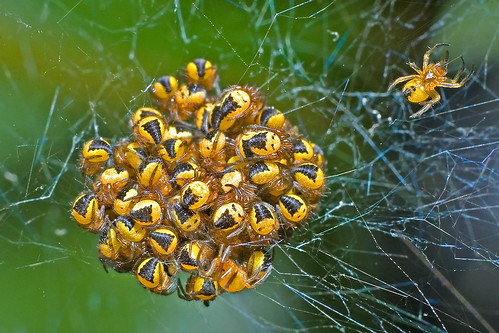
The popular presentation of the kin selection vs group selection affair still seems to be very confused. For example, consider the coverage of a recent study by some group selection advocates: "Elusive Form of Evolution Seen in Spiders". The article says:

According to one model, known as kin selection, highly related organisms such as bees and ants can develop altruistic behavior — for example, many females forgo reproduction in order to raise the queen’s brood — because they will still pass down their genes indirectly, through the queen. But despite its altruistic appearance, kin selection is selfish — it helps an individual’s genes to survive. Can natural selection promote truly unselfish traits, behaviors that are good for the group, but not necessarily to the benefit of individuals (or their immediate kin)? Some evolutionary models predict that it can [...]

The rest of the article is all about group selection. Can kin selection be selfish while group selection is altruistic? Not according to the modern scientific consensus on the topic - that has kin selection and group selection being different accounting methods that attempt to account for the way in which genes propagate in viscous populations. Modern versions of these theories make the same predictions.

Originally, group selection was widely imagined as taking place between demes. However Williams, Maynard Smith, Dawkins and many others pointed out that this sort of "group selection" didn't work very well - individual-level adaptations swamped the group-level ones. Much later, the "groups" of group selection were re-imagined as involving any kind of social cohesion, including - critically - family groups consisting of mothers and their offspring - or groups of siblings. Individuals are then modeled as being part of an enormous number of partly-overlapping groups - including, critically, close family groups. With this radical readjustment, this new form of group selection - if properly applied - reproduces the predictions of kin selection exactly.

Most group selection advocates have now (finally) come on board with the scientific consensus on kin selection that was established in the 1970s. They recognize they these two theories - if properly applied - produce the same predictions and results. However, you wouldn't guess at this from this popular article. It's promoting the idea of group selection as a novel, revolutionary theory. This conception of group selection is not scientifically accurate.

Another article promoting the study has a different take on it: group selection vs gene selection. Their champions of "gene selection" are Pinker and Dawkins. It should really be group selection vs kin selection. Genes (in the broad sense of heritable information) underlie both.

More coverage:


Update 2014-10-29: Goodnight has weighed in on his spider study on his blog. Kin selection and equivalence are apparently unmentionable topics. To me this seems like a parallel universe.

Saturday, 27 September 2014

Cultural group selection - bibliography

I have previously posted bibliographies of cultural kin selection and the closely-related topic of tag-based cooperation. However some academics have been studying the same topic under a different name and using different models and approaches.

Most bibliographies of cultural group selection seem to be in pre-internet document formats: devoid of links. Here's an HTML linkified one:

Monday, 1 September 2014

Group selection is surprisingly popular

Some statistics follow:

Google trends:

Google NGRAM:

Google scholar:

  • "group selection": 66,000;
  • "kin selection": 29,300;
  • "inclusive fitness": 21,500;

Even if you add together the "kin selection" and "inclusive fitness" volumes, "group selection" often comes out on top.

Group selection doesn't look particularly down-trodden - from this data.

Sunday, 31 August 2014

How kin selection pushed group selection into the scientific fringes

Group selection lost out to kin selection in the 1960s and 1970s as an explanation for cooperative behaviour. Group selection went on to lead an underground existence - in which a few remaining proponents sought out ways to find things which group selection explained which kin selection did not.

We now know that modern versions of these theories make the same predictions. So there isn't really anything that group selection can explain that kin selection cannot. However this didn't stop the group selection proponents from trying to find these types of phenomena. Indeed, if they had succeeded, fame and glory would have awaited them.

This quest took group selection to the borderlands of science. Kin selection was uncontroversially used to explain obvious adaptations - such as breast feeding, parental care and nepotism. Group selection picked more controversial targets - senescence, the maintenance of sexual recombination and cultural evolution. The theme of these topics seems to have been avoiding rapid refutation of: "kin selection explains that without invoking group selection".

This quest now seems to be mostly over. Most of the group selection enthusiasts have publicly given up their original quest - and have accepted the equivalence between kin selection and group selection.

However the topics group selection is invoked to explain still seem to be skewed away from those that kin selection is used to explain. As a result, group selection is generally offered as an explanation in areas where the theory doesn't function well. This seems like a hangover which group selection is still recovering from.

The "multi-level" terminology

This article will claim that "multi-level selection" and "group selection" should not be understood as being synonyms.

It does appear that "multi-level selection" is terminology that was invented to give group selection a face lift - and allow it to escape from an unglamorous past.

However, group selection is not more or less "multi-level" than kin selection is. The concepts of "relatedness" and "kin selection" can be applied at multiple levels too. One can meaningfully discuss the relatednes between cells in an ant, the relatedness between an ant and its sisters and the relatedness between entire colonies of ants. This has been understood since the 1970s and it can be seen as a result of the generality of the Price equation.

These days, group selection enthusiasts often prefer to use the "multi-level selection" terminology. This article is my explanation of why I rarely follow them - and why I think it is a confusing gambit. Kin selection is "multi-level" too. Using the term "multi-level selection" fails to distinguish between kin selection and group selection. It is true that kin selection and group selection are equivalent - in the sense that modern versions of these theories make the same predictions. However that doesn't mean that proponents use the same methodologies. These are still topics that are worth distinguishing between. The best way of doing that is, I think to use the terms "kin selection" and "group selection".

Monday, 28 July 2014

Group selection enthusiasm still rampant in the social sciences

Most evolutionary biologists got over group selection back in the 1970s. However, there's one area of biology where it is particularly prominent: the social social sciences. There's particular enthusiasm for cultural group selection - as though cultural evolution plays by different rules in this area.

Cultural kin selection represents an alternative perspective which makes little mention of selection acting on groups. Instead of humans being part of innumerable overlapping groups, their genes and memes are modeled as being related to the genes and memes of others. This perspective has been much more enlightening in the organic realm, and I think it will prove to be much more enlightening in the cultural realm as well. The largely-fictional groups of group selection are just a clumsy and awkward way of viewing the situation - most of the time. The perspective has a long history of producing dud science.

In most of evolutionary biology, 90% of scientists are using kin selection and 10% are using group selection. In the social sciences, it's the other way around. I think that this fairly clearly indicates the existence of a problem.

Why is group selection still so popular among social scientists? For a long time many of them held out hope that it would prove to be a new theory of social behaviour. These hopes now appear to have been crushed by the failure of the theory to make different predictions from the long-established orthodoxy of kin selection.

Social scientists have a long history of not understanding how evolutionary biology applied to their subject areas. As a result there's a large scientific lag afflicting the study of cultural evolution. Group selection enthusiasm seems to be clearly one aspect of that: the numerous social scientists involved are stuck back in the 1960s somewhere, where the virtues of the kin selection perspective were not yet widely appreciated.

Lastly, group selection in the social sciences seems to have found extensive funding from the John Templeton Foundation. In a surreal twist to the final battle between science and religion, group selection enthusiasm has been funded to the tune of millions of dollars. That kind of marketing budget can buy a considerable quantity of confusion.

Sunday, 1 June 2014

Obvious types of kin selection

If you ask a student of kin selection about the most obvious aspects of the human phenotype that have been influenced by kin selection and are coded for in human DNA, I think you would generally get back a list looking something like this:

  • Genitals;
  • Breasts;
  • Placenta;
  • Umbilical cord;
  • Female body fat;
  • Maternal love;
If you ask a group selection proponent the corresponding question (what are the most obvious aspects of the human phenotype that have been influenced by group selection and are coded for in human DNA), I think you would get back a very different list. The group selection proponent might be more likely to mention multi-cellularity - but I think they would be highly likely to back a very different list.

What's up here? Kin selection and group selection are basically the same thing.

I don't pretend to have a complete explanation for this - but I think the group selection enthusiasts were led astray by the urge to distinguish themselves from kin selection enthusiasts. If discussing family groups, it was obvious that kin selection applied to it - and explained it. The group selection advocates therefore focused their attention elsewhere - where it seemed as though there was more chance to explain new phenomena that kin selection failed to cover. This hypothesis explains the migration of group selection enthusiasts to cultural evolution - since that is obviously not down to shared DNA.

Eventually, there was nowhere else to run, and the group selection advocates mostly gave up their claims that group selection was something new and different. Now the rhetoric in the area has mostly shifted to other issues.